How to Study in the UK After 12th: The UCAS Guide for Indian Students
No extracurriculars required. British universities only care about your academic obsession. Here is the UCAS timeline, the 3-year cost advantage, and the reality of the Graduate Route visa.
Sources- UCAS, UK Home Office and UK Visas and Immigration (UKVI).
The United Kingdom offers a completely different psychological landscape for Indian applicants compared to the United States.
If you are a student who hates the idea of “building a well-rounded profile” with debate clubs and sports, and you just want to sit in a library and obsessively study Physics, the UK is your paradise. British universities do not use “holistic” admissions. They are ruthlessly academic.
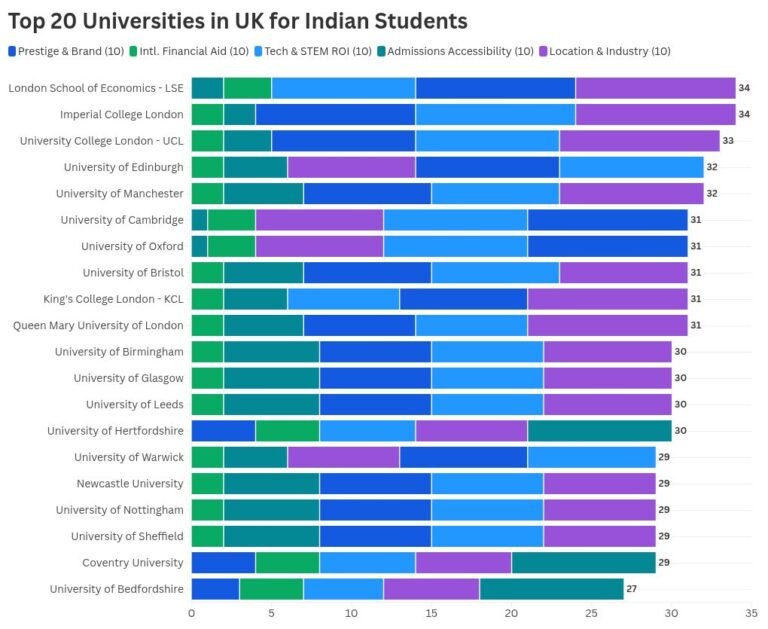
At Gnosis StudyStats, we classify the UK as a Tier 3 (Brand & Prestige) destination, but with a massive financial loophole: The 3-Year Bachelor’s Degree. Look at the chart above. Let’s break down how saving a year of your life translates into saving ₹1 Crore, and how to conquer the infamous UCAS portal.
💰 1. The Financial Reality: The 3-Year Advantage
In India and the US, a standard Bachelor’s degree takes 4 years. In England, Wales, and Northern Ireland, it takes exactly 3 years (Scotland takes 4).
-
The Math: The average tuition and living cost for an international student in the UK is around £30,000 ($38,000) per year. Because you skip the 4th year, your total degree cost caps out around $115,000 (₹95 Lakhs).
-
The Opportunity Cost: Not only are you paying one year less in tuition, but you are also entering the global workforce a year earlier than your peers in the US, earning a full year’s salary while they are still taking final exams.
📋 2. The 12th Grade Eligibility Matrix
The UK system highly respects Indian board exams, but their cutoffs are rigid and unforgiving.
-
CBSE / ISC / State Boards: Top-tier “Russell Group” universities (like UCL, King’s College, or Imperial) generally demand a minimum of 85% to 95% in your 12th boards, with specific score requirements in your core subjects (e.g., 90% in Math if you are applying for Engineering).
-
English Proficiency: Most universities accept a 75%+ score in 12th-grade English (CBSE/ISC) in lieu of an IELTS exam. However, if your score is lower, or you studied in a State Board, you will need to take the UKVI IELTS.
⏳ 3. The UCAS Timeline & The “Rule of 5”
You cannot apply to 20 universities in the UK like you can in the US. You use a single centralized portal called UCAS (Universities and Colleges Admissions Service).
The Golden Rule: UCAS legally restricts you to choosing a maximum of 5 courses across the entire UK. You must choose wisely.
-
Mid-October (Class 12): The Oxford, Cambridge (Oxbridge), and Medicine/Dentistry deadline. If you are applying here, you must submit everything by October 15th.
-
End of January (Class 12): The standard deadline for the majority of UK undergraduate courses.
-
May – June: You will receive “Conditional Offers.” This means the university accepts you, on the condition that you actually achieve the 90% you predicted in your final May board exams.
✍️ 4. The Personal Statement (No Fluff Allowed)
You write exactly one Personal Statement (maximum 4,000 characters) that goes to all 5 of your university choices.
-
The US Essay vs. The UK Essay: A US essay might start with a story about your grandmother’s cooking to show your character. If you do that in the UK, they will reject you.
-
The Winning UK Formula: Your statement must be 80% academic. It should read like a cover letter for a job. Discuss the specific books you have read outside the syllabus, the online courses (Coursera/edX) you have taken in your subject, and why you are academically prepared for the rigor of a British university.
🛂 5. The Visa Reality: The Graduate Route
Once you graduate, you are eligible for the Graduate Route Visa, which allows you to stay in the UK and look for work for 2 years (3 years if you complete a PhD).
-
The Catch: While it is a great buffer, the UK job market is currently tight. You must use your 3 years of university to aggressively network and secure summer internships. You cannot wait until you graduate to start looking for sponsorship.
🔗 Essential Portals & Tools
Bookmark these official portals to execute your UK application:
- UCAS Hub: The central portal where you will search for courses, track application deadlines, upload your Personal Statement, and manage your 5 university choices.
- UKCISA (UK Council for International Student Affairs): The ultimate, legally accurate resource for understanding your Tier 4 student visa rights, working hours, and the Graduate Route.
- The Russell Group: The official site representing the 24 leading research universities in the UK (the equivalent of the US Ivy League). Essential for researching prestigious courses.
❓ FAQ: Studying in the UK After 12th
Q: “Can I apply for a Master’s degree in the US later if I have a 3-year UK Bachelor’s?”
A: This is a major concern. Many top US universities require a 4-year Bachelor’s degree for Master’s admission. However, highly ranked 3-year UK degrees (especially from the Russell Group) are increasingly being accepted by progressive US institutions. You must check with the specific US university’s graduate admissions office.
Q: “What if I miss the January UCAS deadline?”
A: You can still apply through UCAS Extra (Feb-July) or Clearing (July-October). Clearing is how UK universities fill empty seats right before the semester starts, often with slightly lowered grade requirements.
📚 Official Data Sources
1. UK Application Statistics & Architecture: Sourced from the official UCAS (Universities and Colleges Admissions Service) end-of-cycle data reports (2025/2026 cycle).
2. Post-Study Work Visa Parameters: Based on the latest UK Home Office and UK Visas and Immigration (UKVI) guidelines regarding the Graduate Route and Student visa (formerly Tier 4) pathways.
.cluster-nav-box {
background-color: #f8f9fa;
border-left: 5px solid #27ae60;
padding: 20px;
margin: 30px 0;
border-radius: 4px;
font-family: sans-serif;
box-shadow: 0 2px 5px rgba(0,0,0,0.05);
}
.cluster-nav-title {
font-size: 1.2em;
font-weight: bold;
color: #2c3e50;
margin-bottom: 15px;
text-transform: uppercase;
letter-spacing: 0.5px;
}
.cluster-nav-list {
list-style-type: none;
padding-left: 0;
margin: 0;
}
.cluster-nav-list li {
margin-bottom: 10px;
line-height: 1.5;
}
.cluster-nav-list a {
color: #2980b9;
text-decoration: none;
font-weight: 500;
transition: color 0.2s ease;
}
.cluster-nav-list a:hover {
color: #27ae60;
text-decoration: underline;
}
.nav-current-tag {
background-color: #27ae60;
color: white;
font-size: 0.8em;
padding: 2px 6px;
border-radius: 3px;
margin-left: 8px;
font-weight: bold;
}
Your step-by-step blueprints for securing a Bachelor’s degree abroad: