|

The Data-Driven SOP: Prove Your Value with Evidence, Not Emotions

The Data-Driven SOP: Prove Your Value with Evidence, Not Emotions

Stop using generic agent-written templates. Learn the “Evidence Framework” to write an SOP that admissions officers actually read.

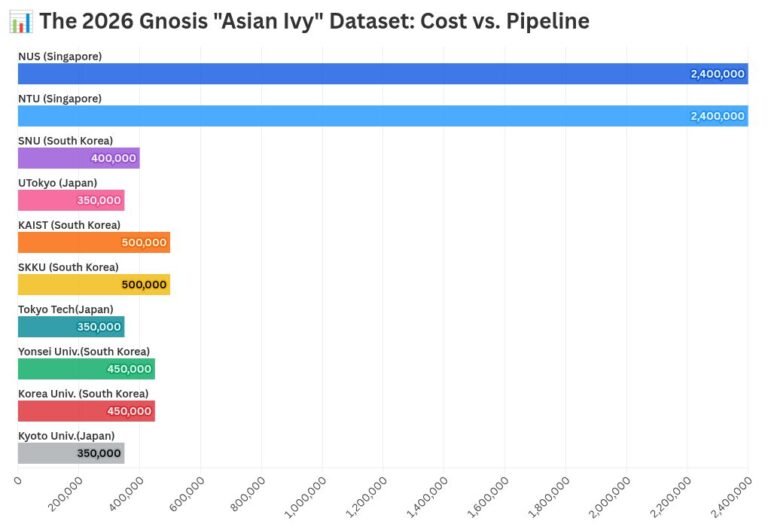
visualization

If you have seen an agent-written Statement of Purpose (SOP), you know exactly how they start: “I have always been fascinated by technology since I saw my first computer…” The Problem: Admissions officers at top universities see this exact sentence 50 times a day. It is boring, generic, and provides zero proof of your ability. The Solution: At Gnosis StudyStats, we treat the SOP like a data analysis project. You don’t tell them you are “passionate”; you show them your metrics.


πŸ› οΈ The “Evidence Framework”: Action + Metric + Connection

Instead of writing vague paragraphs, every project you mention in your SOP should follow this 3-step formula:

  1. The Specific Action: What did you actually build or analyze? (Use strong verbs: Optimized, Developed, Engineered).

  2. The Metric: What was the result? (Use numbers: 15% increase in efficiency, 5,000+ data points, β‚Ή2 Lakhs saved).

  3. The Connection: Why does this make you a good fit for this specific Master’s degree?

.gnosis-table {
width: 100%;
border-collapse: collapse;
font-family: sans-serif;
margin: 25px 0;
box-shadow: 0 2px 5px rgba(0,0,0,0.05);
}
.gnosis-table th, .gnosis-table td {
border: 1px solid #e0e0e0;
padding: 15px;
text-align: left;
line-height: 1.5;
}
.gnosis-table th {
background-color: #2c3e50;
color: white;
font-weight: bold;
font-size: 1.1em;
}
.gnosis-table tr:nth-child(even) {
background-color: #f9f9f9;
}
.gnosis-table td:first-child {
font-weight: bold;
color: #34495e;
white-space: nowrap;
}

Section Weak (Agent Style) ❌ Strong (Gnosis Data Style) βœ…
The Hook “I am a hard-working student who loves Python and wants to learn more.” “After optimizing a legacy Python script that reduced data processing time by 42%, I realized the power of scalable AI.”
Research “I want to work with your world-class faculty on interesting projects.” “I am eager to contribute to Dr. [Name]’s lab, specifically applying my experience in [Skill] to your research on [Topic].”
Goals “I want to get a high-paying job in the US after my Master’s.” “I aim to leverage this degree to transition into a Quantitative Analyst role, focusing on Indian fintech market volatility.”


πŸ—οΈ The 4-Paragraph Structure

1. The “Metric” Hook

Start with your most impressive technical achievement. Immediately prove you have the “chops” to handle a rigorous Master’s program.

2. The Technical Deep-Dive

Discuss 2-3 major projects or work experiences. Mention the specific libraries (Pandas, Scikit-learn), tools, or economic models you used. This proves you aren’t just a “fan” of the subject; you are a practitioner.

3. The “Why This University?”

This is where 90% of students fail. Do not talk about the “beautiful campus.” Mention a specific course code, a specific professor’s recent paper, or a specific lab. This proves you did your DIY Research.

4. The ROI Conclusion

Briefly explain your 5-year plan. How does this degree fill the “gap” in your current skill set? Finish with a confident statement of what you bring to their campus culture.


βœ… The “No-Agent” SOP Checklist

  • [ ] Did I remove the words “passionate,” “fascinated,” and “inspired”?

  • [ ] Does every paragraph contain at least one number or specific technical tool?

  • [ ] Did I mention at least two specific things about this university that aren’t on the homepage?

  • [ ] Is it under 1,000 words? (Admissions officers are busy; be concise).


πŸ“š Official Sources

  • Admissions Trends: Based on 2025/2026 faculty feedback surveys from the Council of Graduate Schools (CGS) regarding the importance of technical specificity in holistic admissions.

  • Plagiarism Policy: References standard Turnitin and AI-detection thresholds used by university admissions offices (e.g., UCAS, University of California system) to flag template-based SOPs.


.cluster-nav-box {
background-color: #f8f9fa;
border-left: 5px solid #2ecc71;
padding: 20px;
margin: 30px 0;
border-radius: 4px;
font-family: sans-serif;
box-shadow: 0 2px 5px rgba(0,0,0,0.05);
}
.cluster-nav-title {
font-size: 1.2em;
font-weight: bold;
color: #2c3e50;
margin-bottom: 15px;
text-transform: uppercase;
letter-spacing: 0.5px;
}
.cluster-nav-list {
list-style-type: none;
padding-left: 0;
margin: 0;
}
.cluster-nav-list li {
margin-bottom: 10px;
line-height: 1.5;
}
.cluster-nav-list a {
color: #2980b9;
text-decoration: none;
font-weight: 500;
transition: color 0.2s ease;
}
.cluster-nav-list a:hover {
color: #2ecc71;
text-decoration: underline;
}
.nav-current-tag {
background-color: #2ecc71;
color: white;
font-size: 0.8em;
padding: 2px 6px;
border-radius: 3px;
margin-left: 8px;
font-weight: bold;
}

πŸ› οΈ The 2026 DIY Application Series

You are currently reading Part 2 of our guide to beating the study abroad agents. Read the rest of the blueprints below:

Similar Posts

Leave a Reply

Your email address will not be published. Required fields are marked *