The LOR Strategy: How to Write the “Ghost Draft” for Your Indian Professor
Your professors are too busy to write a custom Letter of Recommendation. This is your biggest advantage. Here is how to write a data-driven “Ghost Draft” that wins admissions and scholarships.
Let’s address the elephant in the room regarding the Indian education system: Professors rarely write Letters of Recommendation (LORs). When you ask for one, 90% of professors will tell you: “Write a draft, email it to me, and I will print it on the college letterhead.” Many students see this as a burden and download a generic template from the internet.
At Gnosis StudyStats, we view this as a massive strategic advantage. Admissions committees at top global universities rank LORs strictly on specific technical evidence. If you control the pen, you control the evidence.
❌ The Generic LOR (Why Agents Fail)
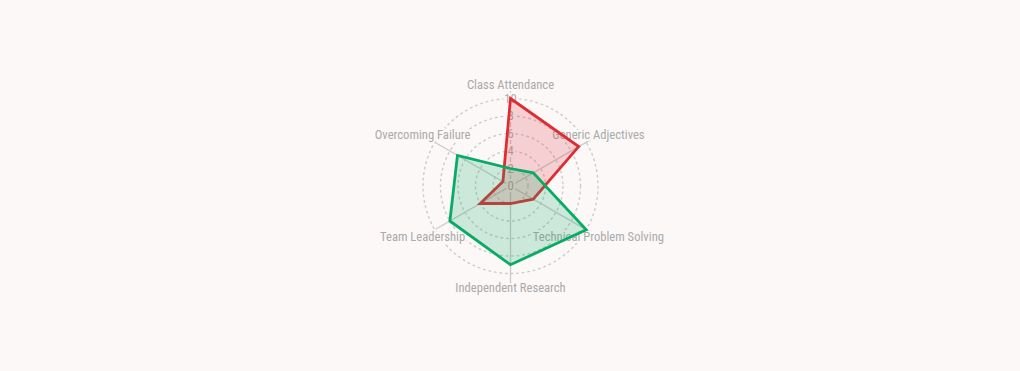
Look at the tiny grey shape on the radar chart above. This represents what study abroad agents typically draft.
-
“Kabir is a very punctual and hard-working student.”
-
“He attended all my classes and got an A grade.”
-
“I highly recommend him for your esteemed university.”
The Problem: The admissions committee already has your transcript. They know you got an A. They know you attended class. Wasting an LOR to repeat your GPA is a massive red flag that shows you have zero practical research skills.
✅ The “Ghost Draft” Framework (The Gnosis Method)
Your goal is to write a draft from the professor’s perspective that highlights the green areas of our radar chart: Technical Problem Solving and Independent Research. To do this, use the Incident-Action-Outcome formula.
1. The Incident (The Context)
Write about a specific time you struggled with a high-level concept in their class or lab.
-
Example Draft: “During my Advanced Database Management course, I assigned a complex project requiring the normalization of a massive legacy dataset. Most students relied on basic SQL queries…”
2. The Action (Your Technical Pivot)
Explain exactly how you solved it using a specific tool or framework.
-
Example Draft: “…However, [Your Name] recognized the latency issues. Instead of standard queries, he independently researched and implemented a Python-based Pandas pipeline to clean the data…”
3. The Outcome (The Peer Comparison)
The best LORs compare you to your peers using a metric.
-
Example: “…His approach reduced processing time by 40%. In my 12 years of teaching, [Your Name] ranks in the top 2% of undergraduates when it comes to independent, self-directed problem-solving.”
📝 The Execution Strategy
-
Write in Different Voices: If you need 3 LORs, do not make them sound identical. Make the HOD sound formal and academic. Make your project guide sound highly technical and data-focused.
-
Include “Constructive” Weakness: A perfect LOR looks fake. Include a minor pivot. (e.g., “Initially, his presentation skills were raw, but over two semesters, I watched him aggressively refine his data-storytelling abilities…”)
-
The PDF Lock: When you give the final draft to your professor, ask them to print it, sign it, stamp it, and scan it as a PDF. Do not let them upload a basic Word document.
❓ FAQ: Letters of Recommendation
Q: “Who should write my LOR for an MS in the US?”
A: Titles do not matter as much as relationships. A highly detailed, technical letter from an Assistant Professor who supervised your final year project is 10x more valuable than a generic two-sentence letter from the College Principal or Dean who doesn’t know your name.
Q: “How to write a letter of recommendation for MS in CS from a professor?”
A: Focus strictly on coding languages, mathematical logic, and project scope. Ensure the LOR specifically mentions your GitHub repositories, your ability to debug complex architecture, and your teamwork during hackathons.
Q: “Do universities actually verify LORs?”
A: Yes. Universities use software to track the IP address of where the LOR is uploaded. Ensure your professor uploads it from their official university email ID (@university.edu.in) and ideally from the college network, not a personal Gmail address.
.cluster-nav-box {
background-color: #f8f9fa;
border-left: 5px solid #2ecc71;
padding: 20px;
margin: 30px 0;
border-radius: 4px;
font-family: sans-serif;
box-shadow: 0 2px 5px rgba(0,0,0,0.05);
}
.cluster-nav-title {
font-size: 1.2em;
font-weight: bold;
color: #2c3e50;
margin-bottom: 15px;
text-transform: uppercase;
letter-spacing: 0.5px;
}
.cluster-nav-list {
list-style-type: none;
padding-left: 0;
margin: 0;
}
.cluster-nav-list li {
margin-bottom: 10px;
line-height: 1.5;
}
.cluster-nav-list a {
color: #2980b9;
text-decoration: none;
font-weight: 500;
transition: color 0.2s ease;
}
.cluster-nav-list a:hover {
color: #2ecc71;
text-decoration: underline;
}
.nav-current-tag {
background-color: #2ecc71;
color: white;
font-size: 0.8em;
padding: 2px 6px;
border-radius: 3px;
margin-left: 8px;
font-weight: bold;
}
You are currently reading Part 4 of our guide to beating the study abroad agents. Read the rest of the blueprints below:
- Part 1: The Ultimate 12-Month DIY Roadmap (IELTS to Visa)
- Part 2: The Data-Driven SOP: Prove Your Value with Evidence
- Part 3: The Cold Email Masterclass: Hack the US Assistantship
- Part 4:
- Part 5: How to Shortlist Universities Like a Pro: The Global ROI Matrix
- Part 6: IELTS vs. TOEFL vs. PTE: Which Test Actually Guarantees Your Visa?